
天才冲冲冲
[图]Windows 11 Beta获更新:任务栏右键菜单新增任务管理器入口_我的网站

A |
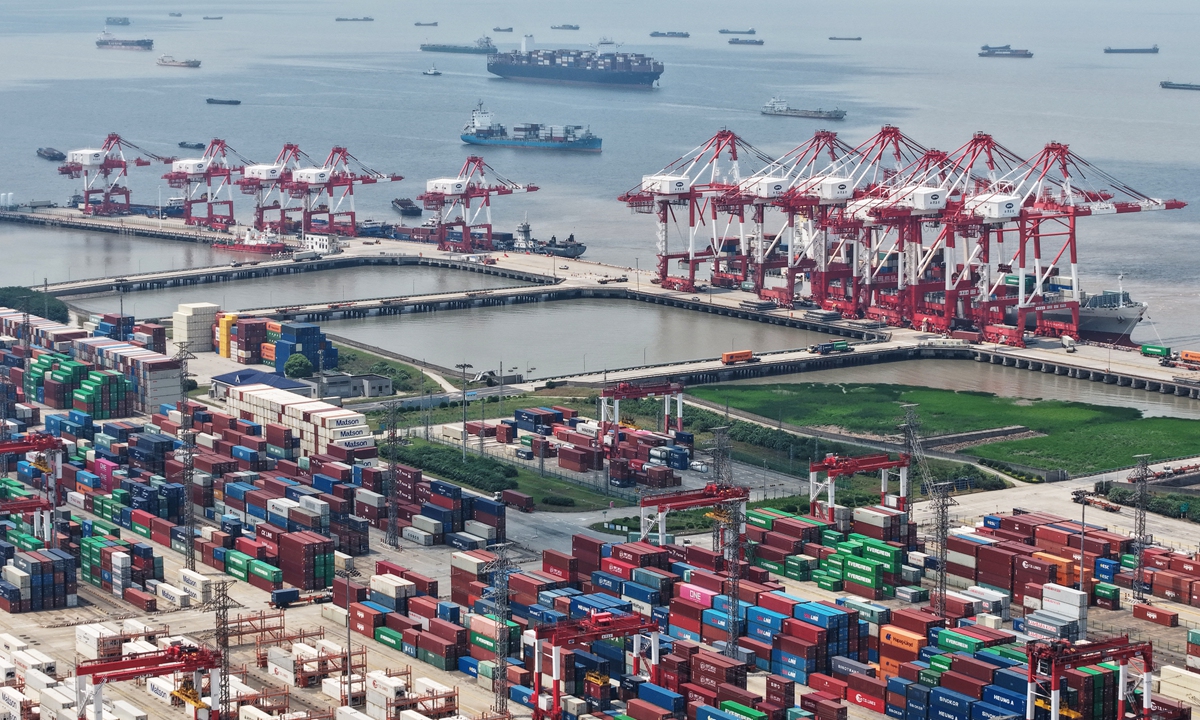
China's rapid rise in innovation capabilities has drawn broad recognition and positive assessments from the international community. However, some have taken a different stance, expressing concerns over China's technological and industrial advancement and even promoting the so-called "China Shock 2.0" narrative for various reasons, including the unfounded claim that China's industrial development is limiting others' growth opportunities.
A closer look reveals why this narrative does not hold up, for two fundamental reasons.
First, this narrative deliberately overlooks the inclusive, open and empowering nature of China's innovation.
China has always been a committed practitioner, active promoter, and major contributor to global economic, trade and technological cooperation. Through technological advancement and industrial upgrading, China has not only developed itself, but also provided the world with an increasing number of "innovation dividends."
For instance, digital economy, technological innovations in areas such as artificial intelligence applications, mobile payments and e-commerce have provided developing countries with valuable pathways for digital transformation. In the green energy sector, advances in China's photovoltaic, wind power and new energy vehicle industries have directly driven down the global cost of renewable energy, offering affordable solutions for countries tackling climate change. In consumer markets, high-quality, efficient, and cost-effective Chinese products have expanded global supply, reduced living costs and helped ease inflationary pressures worldwide.
Moreover, fast-growing Chinese innovation-driven companies have delivered returns of several times or even dozens of times for investors from around the world.
Companies from around the world can quickly find partners in China across the entire innovation chain, from research and development (R&D) and pilot production to mass manufacturing, making the commercialization of innovation more efficient.
They have not only succeeded in the Chinese market, but also strengthened their competitiveness globally. Facts have demonstrated that China's emerging technologies and products bring opportunities rather than shocks, and empowerment rather than threats to the world.
Second, it ignores the fundamental trends of technological innovation and the underlying dynamics of industrial evolution.
China's innovation has been built through years of strengthening its own capabilities. In recent years, the country has continued to increase investment in research and development, with its R&D spending ranking second globally.
Funding for basic research has reached a record high as a share of total R&D expenditure, while its pool of scientific and technological talent continues to expand. Through closer collaboration between the scientific community and industries, China has made rapid technological progress, driven continuous industrial upgrading and taken a leading position in some fields.
Innovation-driven development inevitably fuels industrial transformation and the dynamic reshaping of global production capacity, which is a natural outcome of international industrial division and cooperation.
For example, after years of technological accumulation, China has seized the opportunities created by the global green transition and developed competitive strengths in the "new trio" industries - new energy vehicles, lithium batteries and photovoltaic products - which have gained growing popularity in global markets. Portraying China's industrial upgrading as a "shock" is, in essence, a rejection of the broader historical trend of economic globalization.
"Innovation dividends" represent a positive-sum game, as the benefits of technological progress ultimately serve humanity. Distorting China's technological and industrial innovation and promoting the so-called "China Shock 2.0" narrative reflect outdated zero-sum thinking in some countries, while also revealing attempts to use criticism of China as a pretext to further advance protectionist policies.
Cutting through the rhetoric of protectionism, it becomes clear that the so-called "China Shock 2.0" narrative and "China overcapacity" claims are politically driven narratives that are detached from reality and lack factual basis.
Over the past decade, China has remained a major engine of global economic growth, contributing around 30 percent to global growth. In the past, China mainly provided the world with "market dividends" through its vast domestic market and cost advantages. Today, while continuing to offer greater "market dividends," China has also created "development dividends" by serving as a stable anchor and important hub for global industrial cooperation through its industrial growth. It is also providing the world with increasing "innovation dividends" through technological advancement.
China's market advantages, industrial development and technological progress are generating growing "market dividends," "development dividends" and "innovation dividends." These benefits, working together and reinforcing one another, are creating greater development opportunities and broader space for the world, offering a key perspective for understanding "China Opportunity 2.0."
Amid a complex and volatile international landscape and slowing global economic growth, innovation has become a crucial pathway to counter downward pressures and generate new growth momentum. Addressing global growth challenges requires greater cooperation in innovation. Rather than spending efforts on crafting the "China Shock 2.0" narrative, some countries should focus on domestic structural reforms and enhance their industrial competitiveness through openness and cooperation.
Embracing China means embracing the future. By using technological innovation to drive industrial innovation, China is accelerating the development of new quality productive forces. At the same time, China continues to expand high-level opening-up and provide new opportunities for the world through its own development. A more open and innovation-driven China will continue to deliver greater development dividends and work with countries around the world to build a more prosperous future.
This was compiled and translated by the Global Times English edition based on an article published in the "Chisu Jinsheng" economic commentary column of the People's Daily on August 7, 2026.
。 Windows 11 Build 22623.870 主要内容讲述人盲文驱动程序解决方案盲文设备在讲述人和第三方屏幕阅读器之间切换时可以继续工作,讲述人功能将自动更改盲文驱动。先决条件如果已经装有盲文驱动,需要按以下步骤移除讲述人功能目前的盲文支持1. 打开设置2. 访问 Apps> Optional features > Installed features3. 搜索 Accessibility – Braille support4. 扩展 Accessibility – Braille support 然后卸载其功能安装新的讲述人盲文支持1. 前往“设置”>“辅助功能”>“讲述人”>“盲文”。

B | 2. 选择更多按钮。3. 通过选择“下载并安装盲文”按钮,从此新窗口下载盲文。4. 安装盲文后,返回设置 > 辅助功能 > 讲述人 > 盲文。5. 从“盲文显示驱动程序”选项中选择第三方屏幕阅读器使用的盲文显示驱动程序。这只需要执行一次。

C | Windows 11 Build 22623.870 的改进[任务栏]基于用户反馈,当用户在任务栏右键时在右键菜单中增加了任务管理器。微软刚开始推出此功能,因此测试版频道中的所有预览体验成员都无法使用该体验。Windows 11 Build 22623.870 修复内容[针对平板优化的任务栏]注意:这些修复仅在您的设备上启用了平板电脑优化的任务栏时才会显示。平板电脑优化的任务栏仍在向 Windows 预览体验成员推出,但尚未对所有人开放。● 通过平板电脑优化的任务栏改进了触摸手势及其动画与触摸键盘的配合方式。[系统托盘更新]注意:只有在您的设备上启用了带有系统托盘更新的平板电脑优化任务栏时,这些修复才会显示。平板电脑优化的任务栏和系统托盘仍在向 Windows 预览体验成员推出,但尚未对所有人开放。● 修复了在系统托盘中拖动图标时导致 explorer.exe 崩溃的问题。Windows 11 Build 22621.870 和 Build 22623.870 均修复的内容● 新的! 微软在设置中增加了对微软账户体验的改进。例如,你可以管理你的Microsoft One Drive订阅和相关的存储提醒。● 新的! 微软为那些注册了Windows Hello Face和Fingerprint的用户增加了一个新的同意书。你对你的生物识别数据有新的选择。你可以继续存储你的生物识别数据,或者如果你超过365天没有使用你的脸部或指纹进行认证,你可以打开设置删除这些数据。如果你升级到Windows 11,还没有看到新的Hello Learn More Privacy文本,你也有这些选择。● 新的! 微软加强了任务栏上的搜索视觉处理,以提高可发现性。这在最初只对少数人开放,并在随后的几个月内更广泛地部署。在微软收集反馈时,一些设备可能会注意到不同的视觉处理。要了解更多关于你可能看到这些变化的原因,请看搜索任何东西,任何地方。● 微软更新了DriverSiPolicy.p7b,用于Windows内核易受攻击的驱动程序阻止列表。

D | 该更新包括易受自带脆弱驱动程序(BYOVD)攻击的驱动程序。● 微软扩展了原始设备制造商(OEM)对目标硬件配置的Hypervisor保护的代码完整性(HVCI)执行的控制。● 微软修复了一个影响微软Azure Active Directory(AAD)应用代理连接器的问题。它不能代表用户检索Kerberos票。错误信息是:"指定的手柄无效(0x80090301)"。● 微软修复了一个影响安全密钥和快速身份在线2.0(FIDO2)的缓存凭证的问题 在混合域连接的设备上,系统会删除这些缓存的凭证。● 微软修复了一个可能导致屏幕上出现垂直和水平线伪影的问题。

E | ● 微软修复了一个问题,当你使用第三方工具定制标题栏时,会影响标题栏。标题栏没有呈现。这次更新确保了标题栏的渲染;但是,微软不能保证所有的文本定制都能像以前一样工作。

F | ● 微软修复了一个问题,当你使用Xbox游戏栏录制游戏时,可能无法同步音频。
Current article:http://s564b.bomanglangsugangunxileba.cyou/yetg/ce9.html
Published on:21:22:30
白莲花_Random reading
- 08-24冷空气来袭!我国多地气温将迎入冬后新低
- 08-21江苏早间苯乙烯市场价格下跌
- 08-26国家防总、应急管理部针对浙江启动防汛防台风四级应急响应
- 08-21恒通股份:上半年归母净利润1.84亿元,同比增长85.49%
- 08-22LIVE UPDATES: Pelosi Expected to Visit Taiwan Amid Trip to Asia, CNN Reports
- 08-26粤港举行研讨活动 聚焦打造湾区游艇生活圈
- 08-24康忙丁!丁俊晖今晚迎本届世锦赛首秀,近4年世锦赛遭遇一轮游
- 08-20Xi'an to host the 4th International Elderly Industry Expo in September
- 08-22UK: Truss is muddy water still Sunak may not get a chance
- 08-25For $32, tourists can star in their own short drama at Hengdian World Studios

一呼百应_Active users
- 민주당은 '윗선'까지 겨냥…'박완수 선거캠프' 측근 구속 갈림길
- Windows 11 Moment 1 更新正式发布 现已可下载
- 彩虹RTX 2060 Vulcan:LCD屏/RGB背板,3599元
- 专利出海交易爆发,中国创新药成为“全球合伙人”
- 闽商走进昌吉木垒开展产销对接
- 美联储减息在即:新加坡股市的最大赢家竟然是S REIT?
- 普京访华的关键议题是什么?听听专家怎么说
- Illinois Shooting Suspect Charged With 7 Murder Counts, Faces Life Sentence - Attorney
- 台风“白海豚”昨天停编 但它带来的雨还将继续
- 去世亲人存款查询将全国推广:可查询银行、保险等金融资产信息,便捷提取符合条件的小额存款
- 外媒:载有伊朗总统飞机暂无伤亡报告 机上人员曾打紧急电话
- 人形机器人运动会启幕 北京地铁全力护航
- 易县太行水镇附近民宿怎么选不踩坑?过来人整理选房逻辑与靠谱方向
- 刘易斯·汉密尔顿承认,对法拉利赛车所做的改动让车辆的表现彻底失控。
- 一次性补贴3000元!今起开始申请,符合条件的别错过
- 涉案金额35万澳元,澳大利亚警方搜寻“生蚝窃贼”,其偷盗养殖场约40万只生蚝,场主称已经养了三四年
- 暑期出境游带哪张卡?招商银行Visa全币种国际信用卡多重返现与汇率补贴详解
- 雷军年会讲话:坚定不移打持久战,启动“移动AIOT”双引擎
求婚大作战_Hottest this week
- 08-22Chief Justice Lalit recommends Justice DY Chandrachud as his successor and as 50th CJI
- 08-21从7月CPI看经济内生增长动力
- 08-20市场监管总局公布经营者集中审查助力整治“内卷式”竞争典型案例
- 08-26新车 | 今年发布,新款本田CR-V将推出越野版,竞争丰田RAV4
- 08-26李金羽:没有一场比赛是轻松的,我们必须拿出100%的精力
- 08-24曾创吉尼斯纪录!百斤大西瓜上市 快递小哥直接用上爬楼机送货
- 08-25宁波提升防台风应急响应级别至Ⅱ级,这份告市民朋友书请查收_信息_市政府
- 08-21德国调查人员发现莱比锡机场事件第三架涉事无人机
- 天才冲冲冲 copyright
- Some of the content comes from the Internet. If you have any offence, please raise it.